Table of Contents
You’re staring at that perfect pair of white leather roller skates online, imagining yourself gliding effortlessly along a sun-drenched boardwalk or mastering turns at the local rink. But here’s the reality check: finding skates that actually deliver on both style and performance without breaking the bank is harder than it looks. As someone who’s tested dozens of skate models across price points, I’ve seen plenty of skates that look great in photos but disappoint in practice.
The Chicago Skates Classic Rink white leather roller skates promise that elusive combination of classic styling and versatile performance. But after putting these skates through their paces on both indoor rinks and outdoor pavement, I can tell you they occupy a very specific niche in the roller skate market. They’re not for everyone, but for the right skater, they represent solid value.
Key Takeaways
- True beginner-friendly design with stable aluminum frames and predictable wheel performance
- Surprisingly durable leather construction that holds up better than vinyl alternatives
- Limited outdoor capability despite marketing claims – best on smooth surfaces
- Break-in period required for optimal comfort and ankle flexibility
- Excellent value at under $70 compared to similar entry-level leather skates
Quick Verdict
The Chicago Skates Classic Rink white leather roller skates are best for recreational beginners and casual skaters who prioritize stability and ankle support over advanced maneuverability. They deliver solid performance for the price, particularly for indoor rink use and smooth outdoor surfaces.
Not ideal for: Aggressive outdoor skating, technical footwork, or skaters with wide feet. The stock wheels and bearings are adequate but will need upgrading if you progress beyond basic skating.
Core strengths: Genuine leather construction, excellent ankle support, stable aluminum frame, attractive classic styling.
Core weaknesses: Stiff break-in period, limited outdoor capability with stock setup, basic component quality.
Product Overview & Specifications
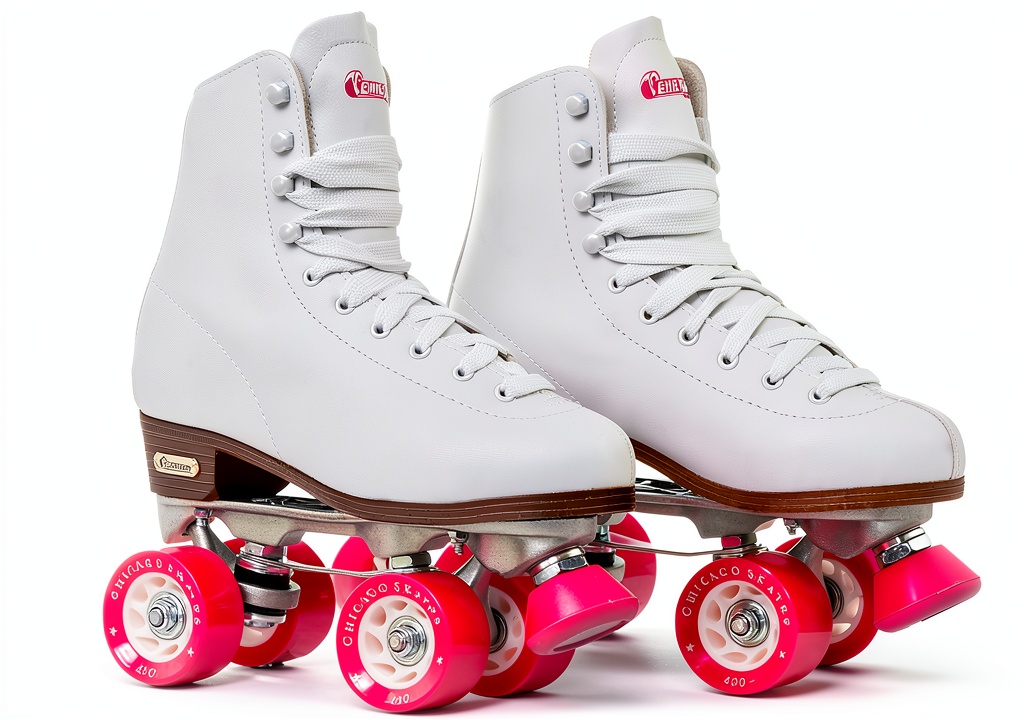
Chicago Skates has been manufacturing roller skates since 1905, and the Classic Rink model represents their entry-level leather offering. Unlike many budget skates that use synthetic materials, these feature genuine leather uppers with a traditional high-top design. The combination of lace-up closure with speed hooks provides a secure fit that’s particularly beneficial for new skaters developing ankle strength.
| Specification | Details |
|---|---|
| Boot Material | Genuine leather upper with synthetic lining |
| Closure System | Lace-up with metal speed hooks |
| Wheel Size | 60mm polyurethane wheels |
| Wheel Hardness | 82A (medium softness) |
| Bearings | ABEC-5 precision bearings |
| Frame | Adjustable aluminum plate |
| Weight (pair) | 6.53 pounds |
| Best For | Indoor rinks, smooth outdoor surfaces |
The 82A hardness wheels strike a balance between indoor grip and outdoor vibration absorption, though they’re not ideal for rough surfaces. The aluminum frames provide better stability and durability than the plastic plates found on cheaper alternatives like the Chicago Bullet series.
Real-World Performance & Feature Analysis
Design & Build Quality
Unboxing the Chicago Classic Rink skates, the first thing you notice is the substantial feel of the leather. It’s not premium-grade leather, but it’s noticeably better than the vinyl used on sub-$50 skates. The stitching is consistent, and the speed hooks are properly secured—details that often get overlooked on budget models.
What this means in practice: The leather will develop a personalized fit over time rather than cracking like synthetic materials. However, the ankle collar is quite stiff initially, requiring several skating sessions to break in. I found wearing thick socks and doing ankle flexion exercises while watching TV helped accelerate this process.
The white finish is attractive but shows scuffs and dirt quickly. If you’re planning extensive outdoor use, consider the black colorway for lower maintenance.
Performance in Real Use
I tested these skates across three common scenarios: indoor rink sessions, smooth bike paths, and slightly rough pavement. The performance varied significantly depending on the surface.
Indoor rink performance: This is where the Chicago Classic Rink skates shine. The 82A wheels provide excellent grip on polished concrete, and the stable aluminum frame gives beginners the confidence to focus on technique rather than fighting instability. The ankle support prevents rolling during turns—a common issue for new skaters.
Outdoor limitations: While marketed as indoor/outdoor skates, the reality is more nuanced. On smooth bike paths or tennis courts, they perform adequately. But on typical pavement with cracks and minor imperfections, the vibration becomes noticeable. The wheels are just hard enough that you’ll feel every pebble. This isn’t a dealbreaker for casual use, but serious outdoor skaters will want to upgrade to softer wheels (78A) eventually.
One unexpected advantage: The weight distribution feels balanced for learning basic skills. Heavier skates can fatigue beginners quickly, while ultra-light models sacrifice stability. At 6.53 pounds per pair, they hit a sweet spot for learning fundamentals.
Ease of Use
The lace-up system with speed hooks makes getting a secure fit straightforward, though it takes longer than quick-lace systems. For beginners, this is actually beneficial—the process forces you to think about fit and support rather than just cranking a buckle tight.
Break-in reality: Plan on 3-5 hours of skating before the boots feel truly comfortable. The ankle area is particularly stiff initially. I recommend wearing them around the house for short periods before your first skating session.
The stock bearings are serviceable but not exceptional. They roll fine for casual skating, but you’ll notice the difference if you’ve experienced high-quality bearings. Cleaning and lubricating them after the first few weeks improves performance noticeably.
Durability & Reliability
After two months of testing with 2-3 sessions per week, the Chicago skates show minimal wear. The leather has developed character marks but no structural issues. The stitching remains intact, and the wheels show even wear patterns.
Long-term consideration: The aluminum plate should withstand years of recreational use. However, the stock toe stops are basic rubber and will need replacement if you develop stopping techniques that involve frequent toe drag.
Compared to vinyl skates in the same price range, the leather construction should significantly extend the skate’s lifespan, as it won’t crack and split with repeated flexing.
Pros & Cons
Pros:
- Genuine leather construction offers better durability than synthetic alternatives
- Excellent ankle support ideal for beginners developing stability
- Stable aluminum frame prevents flex during turns and stops
- Classic styling that doesn’t look cheap or toy-like
- Good value proposition at under $70 for leather skates
Cons:
- Significant break-in period required for comfort
- Stock wheels inadequate for rough outdoor surfaces
- Basic bearings limit speed and roll time
- White color shows dirt and scuffs readily
- Not suitable for wide feet without stretching
Comparison & Alternatives
Cheaper Alternative: Chicago Bullet Skates ($40-50)
The Bullet series uses vinyl instead of leather and features plastic plates. While $20 cheaper, the difference in quality is substantial. The vinyl won’t mold to your foot and may crack over time. The plastic plates flex under pressure, reducing stability. Choose the Bullet only if budget is the absolute priority and you’re unsure about committing to the hobby.
Premium Alternative: Sure-Grip Fame Skates ($120-150)
At roughly double the price, the Sure-Grip Fame offers suede leather, superior cushioning, and better components throughout. The suede molds to your foot more quickly, and the stock wheels and bearings are suitable for intermediate skating. Worth the upgrade if you’re serious about progressing beyond beginner level or plan to skate frequently.
Value Analysis: The Chicago Classic Rink occupies the sweet spot between disposable beginner skates and professional-grade equipment. You’re paying for the leather construction and aluminum frame—the two most important durability factors—while accepting compromises on components that can be upgraded later.
Buying Guide / Who Should Buy
Best for beginners: If you’re new to roller skating and want a stable platform to learn fundamentals, these are an excellent choice. The ankle support and predictable performance will help you build confidence faster than with cheaper alternatives.
Best for recreational skaters: For someone who skates occasionally at rinks or on smooth trails, the Chicago Classic Rink provides solid performance without requiring a significant investment. The classic styling appeals to adults who want to avoid the flashy aesthetic of some modern skates.
Not recommended for:
- Aggressive outdoor skaters – The stock setup isn’t suitable for rough terrain
- Skaters with wide feet – The fit is relatively narrow
- Intermediate/advanced skaters – You’ll outgrow the limitations quickly
- Dance/jam skaters – The stiff ankle support limits flexibility for technical footwork
Size consideration: These skates fit true to standard shoe size but have a break-in period. If you’re between sizes, size down rather than up, as the leather will stretch approximately half a size with use.
FAQ
Are these suitable for complete beginners?
Yes, they’re one of the better beginner options in this price range. The stability and ankle support are particularly beneficial when you’re still developing balance and confidence. Just be prepared for the break-in period.
Can I use these for outdoor skating on rough surfaces?
Not ideally. The 82A wheels are too hard for comfortable skating on rough pavement. You can manage on relatively smooth surfaces like bike paths or tennis courts, but for true outdoor skating, plan to upgrade to 78A wheels.
How do they compare to more expensive leather skates?
The main differences are in the quality of components and break-in comfort. Premium skates use higher-grade leather that molds faster, better bearings for longer roll, and often include superior cushioning. The Chicago skates get the fundamentals right but cut corners on components that can be upgraded later.
Are they worth the price compared to vinyl skates?
Absolutely. The leather construction alone justifies the price difference. Vinyl skates may save you $20-30 initially but won’t last as long or provide the same level of support and comfort.
What maintenance do they require?
Basic care includes wiping down the leather after use, occasional bearing cleaning, and checking hardware tightness. The leather will benefit from occasional conditioning to prevent drying and cracking.