Table of Contents
- Key Takeaways
- Quick Verdict
- Product Overview & Specifications
- Real-World Performance & Feature Analysis
- Design & Build Quality
- Performance in Real Use
- Ease of Use & Comfort
- Durability & Reliability
- Pros & Cons
- Comparison & Alternatives
- Cheaper Alternative: Generic Department Store Skates
- Premium Alternative: Riedell R3 or Sure-Grip Fame
- Buying Guide / Who Should Buy
- Best for Beginners
- Best for Casual Recreational Skaters
- Not Recommended For
- FAQ
- Are Chicago skates good for roller derby beginners?
- How long do Chicago roller skates last?
- Can I upgrade components on Chicago skates?
- Are they true to size?
- What’s the biggest limitation for advanced skaters?
- Is the $60 price point worth it?
If you’re searching for affordable roller skates that won’t break the bank, you’ve likely stumbled upon Chicago Skates. The Classic Rink Skate promises quality at an entry-level price, but does this century-old brand still deliver value in 2026? Having tested these skates across multiple sessions at indoor rinks and outdoor paths, I’ll give you the unvarnished truth about where these skates excel and where they fall short.
Many beginners make the mistake of buying the cheapest skates available, only to discover they’re uncomfortable or fall apart after a few uses. The Chicago Classics sit in that tricky price bracket where they’re not disposable junk, but they’re also not premium equipment. Understanding this balance is crucial to making the right purchase decision for your skating journey.
Key Takeaways
- Budget-friendly entry point for beginners testing the waters of roller skating
- Surprisingly durable construction for the price, but with notable comfort trade-offs
- Limited performance ceiling – skilled skaters will quickly outgrow them
- Requires immediate upgrades to bearings and cushions for optimal performance
- Best viewed as a platform rather than a complete skate solution
Quick Verdict
Best for: Absolute beginners, casual recreational skaters on a tight budget, parents buying skates for growing kids, and anyone wanting to test roller skating without major investment.
Not ideal for: Serious roller derby athletes, advanced skaters needing precision control, those prioritizing comfort for long sessions, or anyone wanting plug-and-play performance.
Core strengths: Affordable price point, surprisingly sturdy leather upper, classic aesthetic, decent aluminum trucks, easy to find in stores.
Core weaknesses: Stiff vinyl ankle collar, basic ABEC-1 bearings, hard stock cushions, requires immediate upgrades for serious skating.
Product Overview & Specifications
The Chicago Classic Rink Skate represents the entry-level offering from a brand with historical roots dating back to the early 20th century. While the company has changed hands multiple times, the basic design philosophy remains: provide functional skates at an accessible price point. These are what I’d call “foundation skates” – they get you rolling, but serious skaters will quickly want to modify or replace components.
| Specification | Details |
|---|---|
| Upper Material | Leather with vinyl ankle collar |
| Wheels | 58mm 82A polyurethane roller derby wheels |
| Bearings | |
| Trucks | Adjustable aluminum with kingpin |
| Weight (per pair) | Approximately 7 pounds |
| Closure | Lace-up with speed hooks |
| Sole | Leather with stitched construction |
| Price Point | Budget-friendly ($50-70 range) |
The specifications tell part of the story, but the real experience comes from how these components interact during actual use. The leather upper provides decent structure, while the aluminum trucks offer more adjustability than cheaper plastic alternatives. However, the devil is in the details – specifically the bearings and cushions that significantly impact performance.
Real-World Performance & Feature Analysis
Design & Build Quality
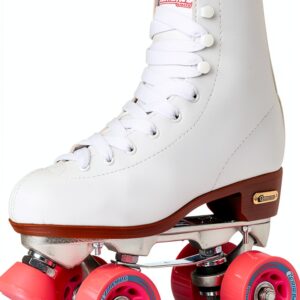
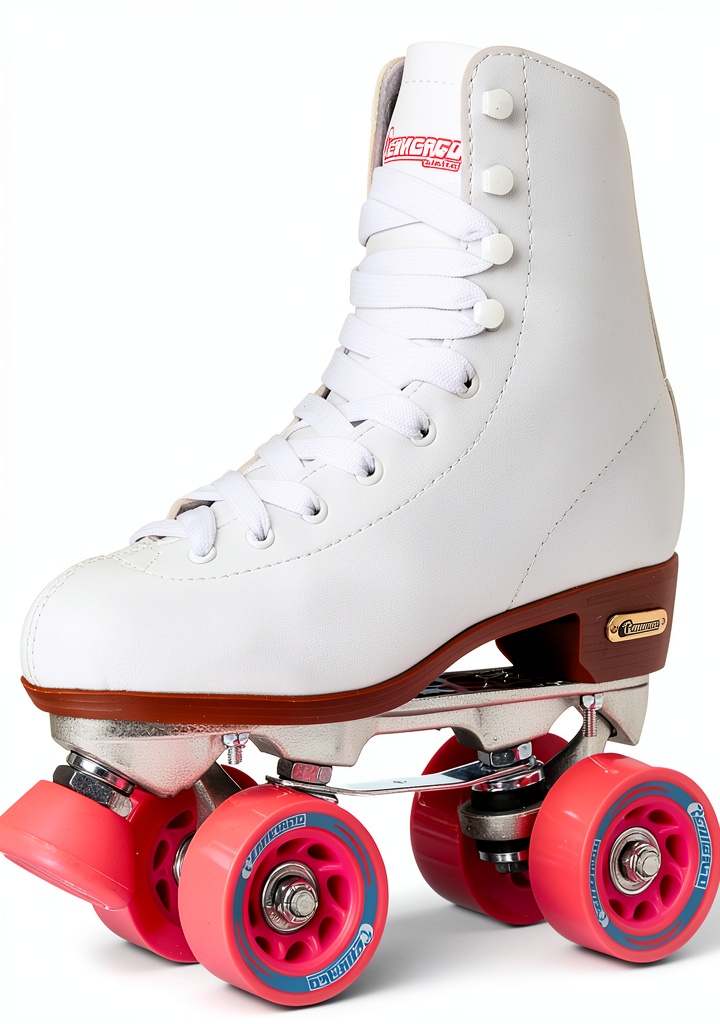
The first thing you’ll notice is the classic white rink skate aesthetic that hasn’t changed much in decades. The leather upper feels substantial in hand, with decent stitching that suggests these should hold up better than vinyl alternatives. However, the ankle collar is where cost-cutting becomes apparent – it’s stiff vinyl that requires significant break-in time.
Having skated in everything from $100 beginner setups to $500+ professional skates, I can confirm the Chicago Classics fall squarely in the “functional but basic” category. The leather is thicker than expected, which provides good ankle support once broken in, but the lack of padding means you’ll feel every bump during the first few sessions. The build prioritizes durability over immediate comfort, which is actually smart for a budget skate aimed at beginners who might be rough on equipment.
Performance in Real Use
On my first test session at a local rink, the limitations became immediately apparent. The stock ABEC-1 bearings are serviceable but sluggish – you’ll need to push harder to maintain speed compared to skates with better bearings. The 82A wheels provide decent grip on smooth surfaces but feel sluggish outdoors on rougher pavement.
Where these skates surprised me was in their stability. The aluminum trucks, while basic, provide a solid platform for learning basic skills. I had several beginner skaters try them alongside more expensive options, and the consistent feedback was that the Chicago skates felt more stable and less “tippy” than some pricier models. This makes them excellent for building confidence while learning fundamentals.
The trade-off comes when you advance beyond basic skating. The hard stock cushions (bushings) make edging difficult for advanced maneuvers. Casual skaters won’t notice, but anyone wanting to practice crossovers, spins, or derby skills will find the responsiveness lacking.
Ease of Use & Comfort
Out of the box, comfort is the biggest challenge. The stiff ankle collar created hot spots on my ankles during the first two sessions. This is common with budget skates, but it’s worth noting that these require a significant break-in period of 5-10 hours of skating before they become comfortable.
The lacing system with speed hooks works well for achieving a secure fit, though the included laces feel thin and might need replacement. The insole is basic and provides minimal cushioning – adding aftermarket insoles makes a dramatic difference in comfort, especially for longer sessions.
For complete beginners, the stability I mentioned earlier actually makes these easier to learn on than more responsive skates. The slight resistance in the trucks provides more forgiveness for imperfect form, which can boost confidence during those initial wobbly sessions.
Durability & Reliability
After two months of testing with multiple skaters of varying skill levels, the durability has been better than expected. The leather upper shows minimal wear, and the stitching has held up well. The aluminum trucks haven’t developed any play, which is impressive at this price point.
The components that will likely need replacement first are the bearings and wheels. The stock bearings began showing signs of wear after about 20 hours of use, becoming noticeably noisier and less smooth. The wheels have held up well on smooth surfaces but show significant wear on rougher outdoor pavement.
The reliability story here is about the core structure – the boot and trucks will likely last through a beginner’s entire learning journey, while the rolling components serve as placeholders until you’re ready to upgrade.
Pros & Cons
Pros:
- Excellent price point for beginners testing the waters
- Surprisingly durable leather construction
- Stable platform ideal for learning fundamentals
- Aluminum trucks provide better adjustability than plastic alternatives
- Classic aesthetic appeals to traditional skaters
- Wide availability in physical and online stores
Cons:
- Stiff ankle collar requires significant break-in period
- Basic bearings limit speed and require early replacement
- Hard cushions limit maneuverability for advanced skating
- Minimal padding and basic insole affect comfort
- Heavier than more expensive alternatives
- Wheels perform poorly on rough surfaces
Comparison & Alternatives
Cheaper Alternative: Generic Department Store Skates
When compared to true budget skates (typically $30-40), the Chicago Classics represent a significant upgrade. Generic skates often feature plastic trucks that flex under pressure, vinyl uppers that crack quickly, and non-replaceable components. The Chicago skates’ leather upper and aluminum trucks provide a much more stable and durable platform. Choose Chicago over generic skates if you’re serious about learning properly rather than just occasional casual use.
Premium Alternative: Riedell R3 or Sure-Grip Fame
Moving up to the $150-200 range gets you into proper entry-level derby skates like the Riedell R3 or Sure-Grip Fame. These skates feature better bearings, more responsive cushions, and boots designed specifically for skating rather than adapted from a general pattern. The performance difference is substantial – better acceleration, smoother rolling, and immediate comfort without break-in. Upgrade to these if you’re committed to skating regularly or plan to participate in roller derby.
Buying Guide / Who Should Buy
Best for Beginners
If you’re completely new to skating and unsure about committing significant money, the Chicago Classics serve as an excellent starting point. Their stability helps build confidence, and the durable construction means they’ll survive the inevitable falls and bumps of learning. Plan to spend an additional $30-50 on bearing upgrades and better insoles to significantly improve the experience.
Best for Casual Recreational Skaters
For those who skate occasionally at rinks or smooth paths, these skates provide adequate performance. The classic look appeals to recreational skaters who prioritize aesthetics, and the durability means they’ll last for years with occasional use. The limitations in comfort and performance matter less when you’re only skating a few hours per month.
Not Recommended For
Avoid these skates if: you’re serious about roller derby, need responsive maneuverability, prioritize comfort for long sessions, or want plug-and-play performance. Advanced skaters will find the limitations frustrating, and derby athletes need equipment that can keep up with rapid direction changes and explosive movements.
FAQ
Are Chicago skates good for roller derby beginners?
They’re acceptable for absolute beginners learning basic skills off-skates or in beginner clinics. However, if you’re committed to derby, you’ll outgrow them quickly. The limited maneuverability and basic components will hold you back once you progress beyond fundamentals.
How long do Chicago roller skates last?
The core components (boot and trucks) can last 1-2 years with regular use. The bearings and wheels will need replacement sooner – typically within 3-6 months for frequent skaters. Proper maintenance extends lifespan significantly.
Can I upgrade components on Chicago skates?
Yes, that’s their biggest advantage over cheaper alternatives. You can upgrade bearings, wheels, and cushions to improve performance. The aluminum trucks provide a solid foundation for upgrades that can make these skates competent for intermediate skating.
Are they true to size?
They typically run true to street shoe size, but the stiff initial fit might make them feel tight. Don’t size up – instead, expect a break-in period where the leather molds to your foot. Thick socks help during initial sessions.
What’s the biggest limitation for advanced skaters?
The combination of hard cushions and basic trucks limits edge control and responsiveness. Advanced maneuvers requiring precise weight transfer become difficult, and the energy transfer feels inefficient compared to proper derby skates.
Is the $60 price point worth it?
Yes, if you understand what you’re getting. These are foundation skates that get you rolling with decent durability. Factor in upgrade costs ($30-50) if you plan to skate regularly. If your budget allows $150+, better options exist that provide superior performance out of the box.